A dental website that can take a booking.
Design and build, with a URL for each treatment and a phone number that matches the Google profile.
Starting fee ₹85,000, plus GST. The column marked on this page is that scope. The other published columns are below.
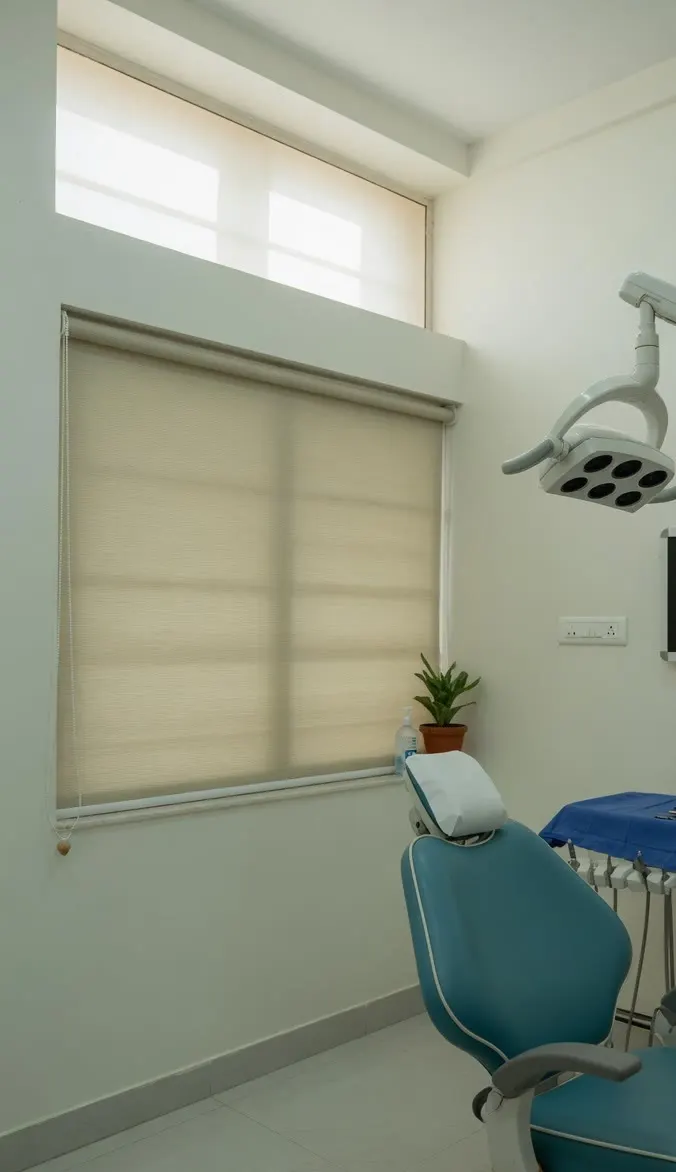
The site is the place the search has to land.
The retainer on the dental SEO page assumes the clinic can take a booking. A single scrolling page, or a theme where every treatment is a tab, cannot be that destination. The build exists so the search has somewhere honest to arrive.
Teeth.in (28 August 2026) and the clinic fee pages cited on the SEO page are why a treatment-led clinic can fund an ₹85,000 site. A practice whose book is scaling and fillings is the wrong buyer for this scope. Fees go on the new site only when the clinic will stand behind the number.
Clinic sites usually fail at the booking, not at the logo.
Patterns seen on clinic sites that ask for a rebuild. Not a survey of every clinic in India.
- 01
The appointment is hard to start
The number is in a footer, or it differs from the Google profile. On a phone, the patient cannot see how to book without hunting.
- 02
Treatments are tabs, not pages
A tab cannot be the URL someone shares, and it cannot be the URL that ranks for one procedure.
- 03
The dentist is a stock portrait
Patients are choosing a person. A template face, or no name at all, leaves the decision to the clinic next door.
- 04
Before-and-after is not this clinic
Photographs of other patients, without consent and without being this clinic’s work, are refused. So is a medical claim written to fill a layout.
What the build includes.
Local Presence, for one clinic. A group or a long article programme is the next column.
- 01
A from-scratch design
Five to seven pages. No theme with the clinic’s logo placed on it.
- 02
A content plan before design
Which treatments get a URL, what each page has to answer, and what the clinic will not claim.
- 03
A booking path
Tap to call, a short form, and the same phone number as the Google profile. The form is tested into the inbox the clinic names.
- 04
A CMS the receptionist can use
Small text edits do not need a developer. The first three months of those edits are inside the fee.
- 05
The SEO structure, not the retainer
Separate URLs, consistent name and phone, and a fast mobile page. Ongoing search work is the dental SEO retainer, sold separately.
How a website project runs
The wireframe is the booking path. Visual design starts after the clinic has agreed which treatments get a page.
- 01
Discovery
What the business sells, who buys it, and what an enquiry has to collect. A booking tool or a catalogue that is not in the quote is named as out of scope.
- 02
Sitemap and wireframes
The pages listed on this page, and a wireframe of the enquiry path, before visual design starts.
- 03
Design
A layout for those pages, from scratch. Not a template with the logo dropped on.
- 04
Build
Responsive pages, a CMS a non-developer can edit, and basic technical SEO: titles, headings, speed, and schema that matches the content.
- 05
Content
A draft against the brief. Prices, clinical claims, legal explanations and project facts are the client's to correct before launch.
- 06
Test and launch
The form is tested into the inbox the client names. Old URLs that already receive enquiries are redirected. Three months of small edits are inside the fee.
Design the pages a patient needs, and stop.
Home, the treatments worth a URL, the dentist by name, the clinic, and a way to book. That is the site. It is not a forty-page medical encyclopaedia. If the current site already has treatment URLs that receive patients, those addresses are mapped and redirected. A redesign that discards them can remove the search equity the clinic has already paid for.
Clinical sentences are drafted against a brief and corrected by the dentist. This practice does not publish a diagnosis, a guaranteed outcome, or a photograph of a patient it cannot trace.
A clinic site, page by page.
Enough to be found and to book. Not a textbook.
- 01
Home
City, treatments, and the next step. The phone is visible without scrolling on a mobile screen.
- 02
Treatment
One procedure. Who does it. What the clinic will say it costs. How to book.
- 03
Dentist
Name, role, and the facts the clinic wants public.
- 04
Clinic
Address, hours, landmark, map. The phone matches the Google profile.
- 05
Contact
A short form and click-to-call. Not a medical questionnaire.
Features that are in the fee, and one that is not.
Integrations that were not quoted are not quietly added at the end.
-
Click to call
On every page, using the number the clinic answers.
-
A short enquiry form
Name, phone, treatment of interest. Tested before launch.
-
Editable treatment text
The clinic can correct a fee or a sentence without a developer.
-
No patient portal
Records, prescriptions and payments are not part of this build. They are a different quote.
The image is not a portfolio piece.
No dental website built by this practice is published here as a case study. The treatment-room image was generated for this site, and the caption says so. A mockup of a fictional clinic will not be presented as a client.
The deliverable, when a project is agreed, is the page list, the design, the build, the redirects, and three months of small edits. A testimonial is added later only with the clinic’s permission and a description that matches the work.
Dental marketing statistics sits in the research archive. Those figures measure the United States. They are not Indian patient behaviour, and they are not Indian fees.
Published client work has to meet the case study standard. This page does not invent one to fill the gap.
Five to seven pages is ₹85,000.
A second branch, or a site that also carries a publishing programme, moves the quote to the next column.
GST on these services is 18%. Three months of management are inside the fee. Care after that is ₹12,000 a month, plus GST, or it stops. Domain and hosting are billed at cost.
One-time project fee, excluding GST. Billed 50% up front and 50% at launch. The number in the column is the fee for that scope.
- Starts here
Local Presence
One clinic. Home, treatments, the dentist, the location, and a booking path.
₹85,000 project fee, plus GST
A fast, credible site that ranks in the local pack and turns a phone-first visitor into a call or a booking.
- 5–7 pages, designed from scratch — no template
- Content plan and page-by-page copy outline, written before design starts
- Local SEO built into the structure: service and location page architecture, LocalBusiness schema, NAP consistency
- Google Business Profile connected and optimised
- Lead form, click-to-call and directions on every page
- Enquiries piped into your CRM, inbox or WhatsApp — connected and tested
- Mobile-first build, Core Web Vitals pass
- GA4 and Search Console configured and verified
- 3 months of website management included — updates, backups, uptime and small edits
What you are paying forA site you own outright, structured so a local search can actually find it, with the content plan, the CRM connection and a quarter of management already inside the fee. No template licence, no page-builder subscription, no bill for the first small edit you ask for.
Around 3 weeks from content handover. After the included three months, website management is the care plan, or it stops.
Get a scoped quote -
Growth Site
More than one branch, or a clinic that wants a content programme on top of the core pages.
₹1,50,000 project fee, plus GST
A site built to be added to — templates, a real CMS and an internal linking structure that can carry a content programme.
- 10–15 pages plus a CMS-driven blog
- Full content plan: page inventory, keyword mapping, briefs and a six-month publishing calendar you can hand to any writer
- Reusable service, location and landing page templates
- On-page SEO for an agreed target keyword set
- CRM integration — HubSpot, Zoho, Pipedrive or your own — with lead source and campaign passed through on every form
- Conversion tracking: events, goals and form attribution
- Speed and Core Web Vitals pass on every template
- Content migration and 301 mapping from the existing site
- 3 months of website management included, then 30 days of post-launch support on top
What you are paying forTemplates your team can publish against without a developer, a six-month content calendar to fill them, and leads landing in the CRM with their source attached. The build is the part that stops being a bottleneck — everything after launch is you adding pages, not paying for them.
Around 5–6 weeks. Includes one round of structural revision and two rounds of design revision. After the included three months, website management is the care plan, or it stops.
Get a scoped quote -
Larger site
A large group site. Not the usual clinic build.
₹2,50,000 project fee, plus GST
A larger site: a design system, templates for a catalogue or a long content programme, and enquiries that land in the CRM with their source attached.
- 20+ pages on a documented design system
- Content strategy for the whole site: cluster map, page inventory, briefs and a twelve-month publishing calendar
- Templates for service, catalogue, comparison and location pages, ready for the team to fill
- A CMS so the business can publish without a developer
- CRM integration — Zoho, HubSpot, or the system the business already runs — with the source attached to every enquiry
- The enquiry path instrumented end to end, including the pages that should produce a conversation
- Full migration with redirect mapping and rank protection
- 3 months of website management included, then 60 days of post-launch support on top
What you are paying forA documented design system, templates the team can publish against, and a migration that maps the old URLs. The fee above is the fixed project fee for this scope.
8–12 weeks depending on page count and integrations. Scope is fixed in writing before the first invoice. After the included three months, website management is the care plan, or it stops.
Get a scoped quote
The starting fee named on this page is ₹85,000, plus GST, for the scope marked "Starts here". The full wording, and the add-ons, are on the pricing page. The work is done by Shruti Parashar, from Sonipat, for businesses in India. There is no office in Delhi, Gurugram or Noida.
The same service, without this industry, is the Website development page. The other half of this industry is SEO for dentists.
Questions about the build.
How much does a dental website cost?
₹85,000, plus GST, for a from-scratch site of five to seven pages: home, treatment URLs, the dentist, the clinic, and a booking path. The content plan and three months of management are included. A multi-location group or a long content programme is the Growth Site at ₹1,50,000, plus GST.
Can the receptionist edit a treatment page later?
Yes. The site is handed over with a CMS a non-developer can use, and the first three months of small edits are included. Structural changes are a different conversation.
Do you guarantee the new site will rank?
No. The build includes the structure that makes ranking possible: separate treatment URLs, consistent name and phone, and a fast mobile page. Rankings depend on competition and on what happens after launch. The SEO retainer is the ongoing half.

Send the site. The reply says whether this build fits.
If the business is outside dentists, or this scope is the wrong size, the reply says so. There is no calendar on this page. The form is the request.
Replies usually go out within one working day.